I Took In a Child No One Wanted. Seventeen Years Later, His Past Came Back and the Courtroom Went Silent
I found the baby early on a Sunday morning, left in the laundry room of my apartment building in Cleveland.
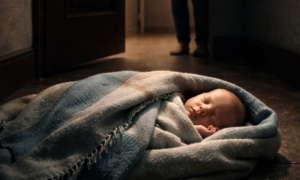
He was wrapped in a towel that smelled faintly of detergent, his tiny fists clenched, his cries hoarse—as if he’d already been crying for a long time. Someone had placed him carefully beside the dryers, away from drafts, as if hoping kindness might replace courage.
I was 39, widowed, and working nights as a physical therapist. I had no children. No plan. Just a heart that broke instantly.
The police came. Social services followed. Paperwork, questions, and quiet warnings about emotional attachment. They called him “the infant.” No name. No family.
Two weeks later, he was still there.
I named him Eli.
What began as emergency foster care slowly became a life. I learned how to function on four hours of sleep. I memorized lullabies I never expected to know. I turned down travel jobs and stopped waiting for “someday.”
Eli grew into a thoughtful, observant boy. He loved astronomy, hated mushrooms, and slept with the light on until he was ten. He called me Mom without asking permission.
I told him the truth when he was old enough to understand—that he was found, not abandoned by me, but by circumstance. He nodded once and said, “Then you chose me.”
Seventeen years passed quietly.
Then a certified letter arrived.
The name on it meant nothing to me at first: Marissa Hale.
She was Eli’s biological mother.
A real estate magnate. Recently divorced. Wealthy. Publicly respected. And now, suddenly, ready to be a parent.
She wanted custody.
In court, Marissa spoke calmly about fear, about youth, about making a terrible decision she’d regretted every day since. She talked about stability. Private schools. Connections. Legacy.
When the judge asked Eli if he wanted to speak, my chest tightened.
He stood slowly.
“I know where I came from,” he said. “And I’m not angry.”
Marissa smiled through tears.
“But the person who raised me,” he continued, “is the one who showed up when nobody was watching.”
The room went still.
“She sat with me through asthma attacks. She learned my learning disability before my teachers did. She chose me every morning.”
Marissa looked down.
“I’m grateful to the woman who gave birth to me,” Eli said. “But I don’t want to be adopted back now that I’m almost grown.”
The word back echoed.
“I don’t want a better life,” he added. “I already have one.”
The judge ordered mediation, therapy, and delayed judgment—placing heavy weight on Eli’s wishes.
Outside, reporters gathered. Marissa’s attorneys spoke of reconciliation.
Eli said nothing.
That night, he asked me quietly,
“Would you be okay if I got to know her… without leaving you?”
I answered honestly. “As long as you don’t lose yourself.”
Months passed. Careful meetings. Honest conversations. Boundaries.
The final ruling left custody unchanged. Marissa’s rights were acknowledged—but not imposed. The court protected relationship, not replacement.
Before we left, Eli hugged her.
Not forgiveness. Not rejection. Just humanity.
Love didn’t fracture that day.
It clarified.
I learned that being a parent isn’t about blood, money, or timing.
It’s about staying—especially when it’s inconvenient.
And the child everyone once walked past?
He grew into someone who knew exactly who he was.
Related Posts
-
 How Family Conflict Led to a Difficult Turning Point After My Baby’s Birth
-
 A Year After Leaving, My Wife Returned to Reconnect with Our Child — A Personal Story
-
 I had just stepped away from my black Mercedes—the kind that turns heads without trying—when everything changed.
-
 A Father of Four Living in a Tent Donates His Last $2 to a Stranger—And His Life Is Forever Changed
About The Author