Hilary Knight and the Hughes Brothers Share the Spotlight on SNL After Olympic Controversy
Olympic champions bring hockey headlines to late-night television
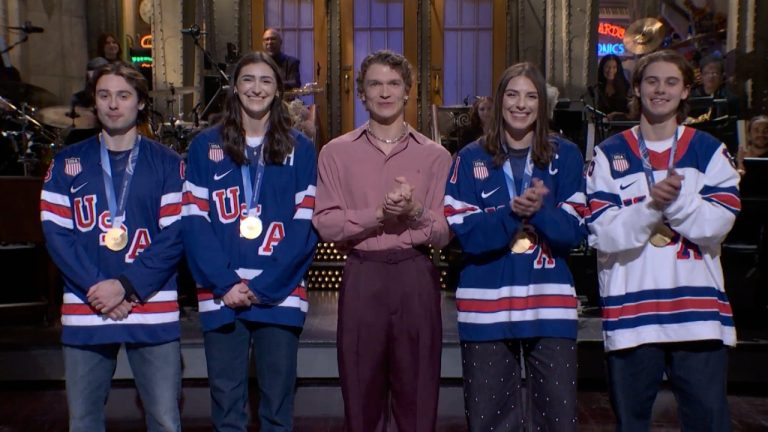
Olympic gold medalists Hilary Knight, Jack Hughes, and Quinn Hughes surprised audiences with a joint appearance on Saturday Night Live, creating one of the most talked-about television moments following the 2026 Winter Olympics.
The appearance came shortly after public discussion surrounding post-Olympic celebrations involving the U.S. hockey teams. Rather than addressing the situation through formal statements, the athletes chose humor, turning a potentially tense topic into a lighthearted and memorable exchange on live television.
As the athletes walked onstage wearing Team USA jerseys and their gold medals, the studio audience responded with enthusiastic applause, reflecting strong public support for the Olympic champions.
A playful exchange rooted in recent debate
During the opening monologue, Hilary Knight joined the Hughes brothers in a segment that acknowledged recent headlines while keeping the tone humorous. Knight joked about sharing the spotlight with the men’s team, drawing laughter from the audience and easing any tension connected to earlier discussions.
The segment focused on camaraderie rather than conflict, presenting both teams as united representatives of American hockey success. The playful dialogue highlighted how humor can help athletes address public conversations without escalating controversy.
A gold-medal moment that energized the audience
The appearance quickly became a standout moment of the episode. Audience members reacted with extended cheering as the Olympic athletes displayed their gold medals, celebrating a rare moment in which both the U.S. men’s and women’s hockey teams achieved major success on the international stage.
The athletes exchanged jokes with the host and playfully refused requests to hand over their medals, creating one of the evening’s biggest comedic highlights. The relaxed atmosphere allowed viewers to see a different side of elite competitors outside the intensity of Olympic competition.
Humor as a bridge between teams
Observers noted that the segment helped shift the narrative from controversy to celebration. By appearing together, Knight and the Hughes brothers emphasized unity and mutual respect between the teams.
Hilary Knight’s presence was particularly significant, reflecting her leadership role in women’s hockey and her long-standing advocacy for recognition and equality within the sport. The shared appearance demonstrated how athletes increasingly use entertainment platforms to connect with broader audiences.
Why the moment resonated beyond sports
The SNL segment gained attention because it blended sports achievement with popular culture. Viewers saw Olympic champions stepping into a comedic setting while still representing the pride and accomplishment of international competition.
The strong audience response highlighted growing interest in hockey and the expanding visibility of women’s sports, especially following successful Olympic performances.
For many fans, the appearance symbolized progress — showing athletes embracing humor and unity while celebrating shared achievements.
A defining post-Olympic media moment
While Olympic athletes frequently appear in media after the Games, this moment stood out because it addressed recent headlines in a positive and engaging way. Instead of focusing on disagreement, the segment emphasized celebration, teamwork, and mutual respect.
The appearance demonstrated how modern sports figures navigate public conversations through authenticity and personality, extending their influence beyond competition.

Conclusion
Hilary Knight and the Hughes brothers turned their Saturday Night Live appearance into more than a comedy cameo. By combining humor with Olympic pride, they transformed recent discussion into a memorable television moment that celebrated unity and athletic achievement.
The segment served as a reminder that the stories surrounding sports often continue long after medals are awarded, shaped by the personalities and connections athletes share with fans.
Related Posts
-
 Savannah Guthrie Returns to Today Show Studio for the First Time Since Her Mother’s Disappearance
-
 Acclaimed Country Music Writer Jeffrey Steele Releases New Single in Tribute to Charlie Kirk
-
 Ilia Malinin Stuns Fans Ahead of World Championships With Quad Axel and Backflip at Art on Ice
-
 Watch Bunnie Xo Gift a New Home to a Grandpa Raising His Grandson — A Heartwarming Story That’s Inspiring Millions
About The Author