Olympic Ice Dance Controversy Erupts After French Judge’s Scores Spark Outrage
A major scandal has broken out at the 2026 Winter Olympics after the ice dance competition’s judging scores drew intense scrutiny and accusations of bias that overshadowed the event’s result. 🇮🇹⛸️
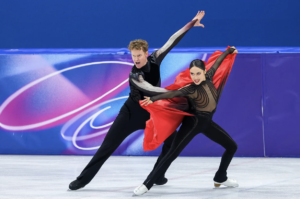
The controversy centers on Jézabel Dabouis, a French judge whose marks for the free dance segment differed significantly from those of her fellow officials. While most of the judging panel ranked American duo Madison Chock and Evan Bates among the leaders, Dabouis gave notably higher scores to the French pair Laurence Fournier Beaudry and Guillaume Cizeron — the team that ultimately won the Olympic gold medal by a razor-thin margin.

What raised eyebrows most was the scale of the disparity. Dabouis awarded the French pair 137.45 points — among the highest on the panel — while giving the American duo 129.74, making her the only judge to score Chock and Bates below 130 points. This created a scoring gap far larger than those from other judges, leading critics and fans to question whether the judging was entirely objective.
The American skaters delivered a performance that many observers described as polished and nearly flawless. Despite this, the French team edged them out in the final tally, winning gold by just 1.43 points — a result that has left observers, supporters, and fans demanding answers.
Critics online pointed not only to this one instance but also to Dabouis’ previous scoring patterns. Some social media users and figure skating analysts pointed out that she had repeatedly given higher marks to the same French pair in recent competitions, fueling calls for increased transparency in judging. A Change.org petition demanding a review and investigation has gathered significant support in the days since the event.
In response to the uproar, the International Skating Union (ISU) issued a statement defending the integrity of the judging process, pointing out that variations among judges are normal and that systems are in place to mitigate bias, including trimming the highest and lowest scores in each segment. The ISU also emphasized its commitment to fairness and ongoing efforts to improve scoring transparency.
Despite the defense from officials, many fans argue that the controversy underscores long-standing challenges in judged sports — where subjectivity can shape outcomes in ways that leave audiences and athletes frustrated. Some commentators have drawn parallels to past Olympic judging scandals in figure skating, insisting that clearer systems and more independent oversight would help maintain trust in results.
For Chock and Bates, the silver medal remains a historic achievement — their first pairs medal at the Olympic Games — and they have publicly expressed pride in their performance. At the same time, they have also acknowledged fans’ calls for greater clarity in judging and supported review mechanisms that ensure fair competition for all athletes.
The ice dance scoring debate at the 2026 Olympics has captivated global audiences — not for the choreography or athleticism, but for the unexpected drama unfolding off the ice and the broader questions it raises about fairness and transparency in judged Olympic sports.
Related Posts
-
 Jourdan Blue Delivers Chilling Rendition of “Breakeven” on America’s Got Talent
-
 Cajun Singer Makes The Voice History — Dustin Dale Gaspard’s Soulful French Performance Sparks Rare 4-Chair Turn!
-
 Coach Predicts Reba Will Win The Voice With “Gritty” Country Singer
-
 How Did a Dog End Up Crossing the Finish Line at the Milan Cortina Olympics? The Owner Finally Explains
About The Author