Ilia Malinin’s Olympic Free Skate Sparks Debate After Emotional Post-Performance Reaction
American figure skating star Ilia Malinin experienced one of the most discussed moments of the Milano-Cortina Winter Olympics after an unexpected free skate performance that reshaped the men’s competition standings. The event quickly generated widespread discussion among fans and analysts, especially after broadcast cameras captured emotional reactions involving his father and coach shortly after the skate.
Olympic Favorite Faces Unexpected Setback
Entering the competition as a leading gold medal contender, Malinin carried significant expectations following a season defined by technical innovation and strong results. Known as the “Quad God” for his groundbreaking quadruple jumps, he planned a technically demanding program designed to maximize scoring potential.
During the free skate, however, Malinin struggled with execution and experienced multiple falls, which had a major impact on his final score. The unexpected outcome surprised many observers and shifted the final rankings, turning the performance into one of the most talked-about moments of the event.

Emotional Reaction Captured on Camera
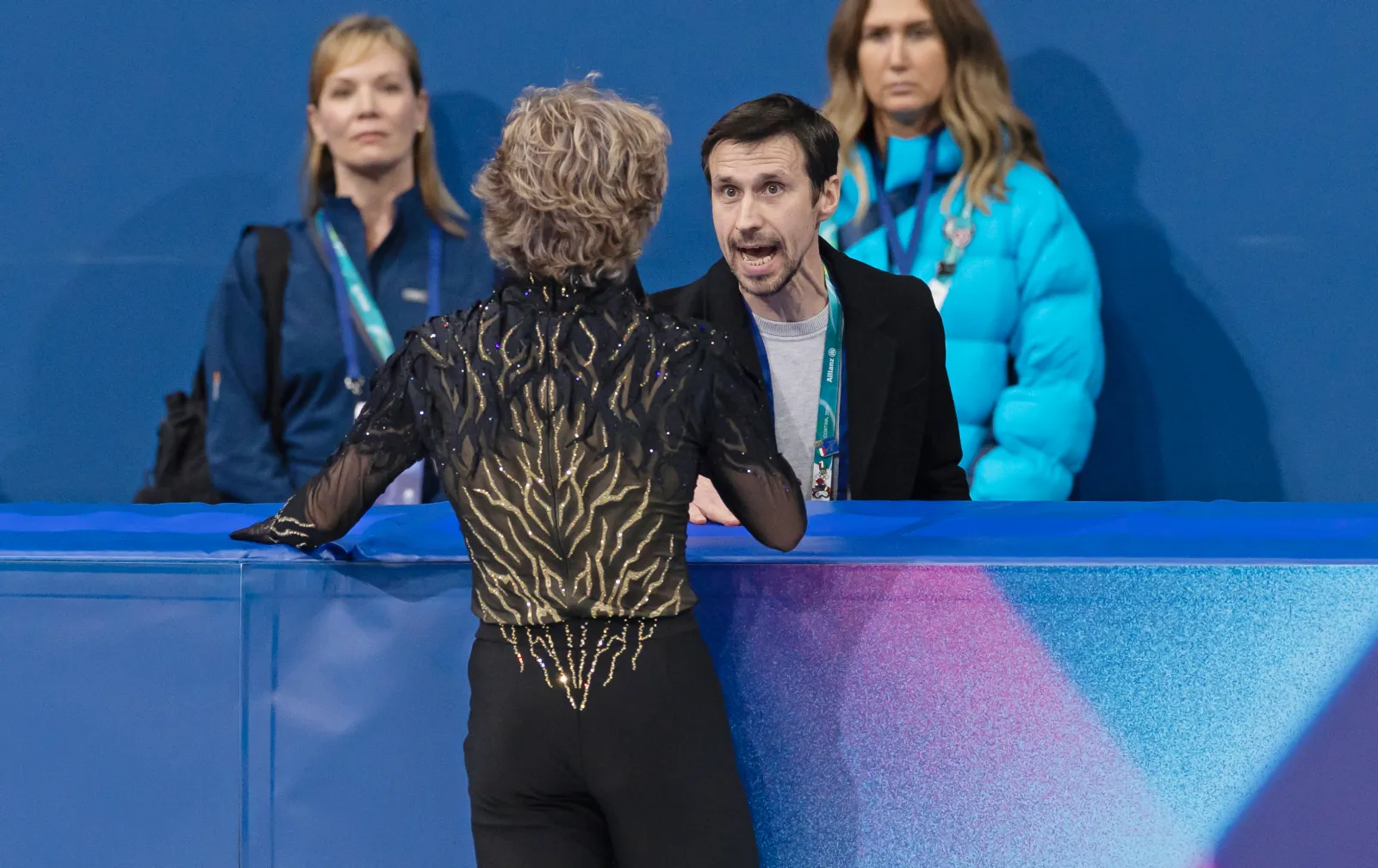
Following the performance, broadcast footage showed emotional reactions near the rink boards involving members of Malinin’s support team, including his father and coach. The moment quickly gained attention online, with viewers debating the meaning behind the visible frustration and intensity.
While social media discussions described the scene as a heated exchange, publicly confirmed information characterizes it primarily as an emotional response in the immediate aftermath of a high-pressure performance. Detailed context about any specific conversation has not been officially confirmed.
Public Discussion and Coaching Dynamics
The footage sparked broader conversations about the challenges faced by athletes coached by family members, as well as the emotional investment required at the highest levels of competition. Many commentators emphasized that strong emotional reactions are common in elite sport, especially following unexpected results at major international events.
Sports psychology experts often note that Olympic competition places extraordinary pressure on athletes and their support teams. Moments of visible frustration or disappointment can reflect dedication and competitive intensity rather than conflict.
The Challenges of High-Risk Technical Programs
Malinin’s program included several high-difficulty elements, particularly multiple quadruple jumps that carry significant risk. Analysts highlighted that when athletes attempt technically ambitious routines, even minor mistakes can dramatically affect scoring outcomes.
The performance demonstrated how the balance between risk and reward plays a crucial role in figure skating strategy, particularly on the Olympic stage where margins between competitors are often extremely small.
Looking Ahead
Despite the setback, Ilia Malinin remains one of the most influential athletes in modern figure skating. His technical achievements continue to push the boundaries of the sport, and many experts believe that difficult Olympic experiences often become turning points that shape future success.
As discussions continue, the event highlights the emotional intensity of Olympic competition and the complex realities behind performances at the highest level of sport.

Related Posts
-
 Sharon Osbourne Shocks the 2026 BRIT Awards With Emotional Tribute to Ozzy Osbourne
-
 Reba McEntire’s Son Shelby Blackstock Speaks Out After Brother Brandon Blackstock’s Death
-
 Britney Spears Arrested in California on Suspicion of DUI
-
 Toby Keith’s “Whiskey Girl”: The Story Behind One of Country Music’s Most Memorable Hits
About The Author